Why Dressing Properly Matters in Cold Conditions
Cold water and winter kayaking introduce real risks that don’t exist in warmer conditions. Cold shock, rapid heat loss, and hypothermia can occur quickly if you’re not dressed correctly. Wind chill and spray make things worse, even when you’re not fully submerged. Dressing for the water temperature, not just the air temperature, is essential for safety and comfort.
Base Layer Essentials
Your base layer plays a crucial role in regulating body temperature and managing moisture. It should be close-fitting, insulating, and quick-drying to keep warmth against your skin. Materials like merino wool or technical synthetics work well, while cotton should be avoided as it traps moisture and accelerates heat loss. A quality base layer designed for paddling conditions, such as purpose-built kayak clothing, helps maintain warmth without restricting movement during long sessions on the water.
Insulating Mid-Layers
Mid-layers add thermal insulation and are especially important in winter kayaking. Neoprene tops, thermal liners, or fleece-lined paddling garments help trap heat while allowing flexibility through the shoulders and torso. The goal is to stay warm without overheating, so choosing breathable insulation that works with your paddling intensity is key.
See also: How Should Ariake Tonkotsu Ramen Soup Be Stored?
Outer Layers for Wind and Water Protection
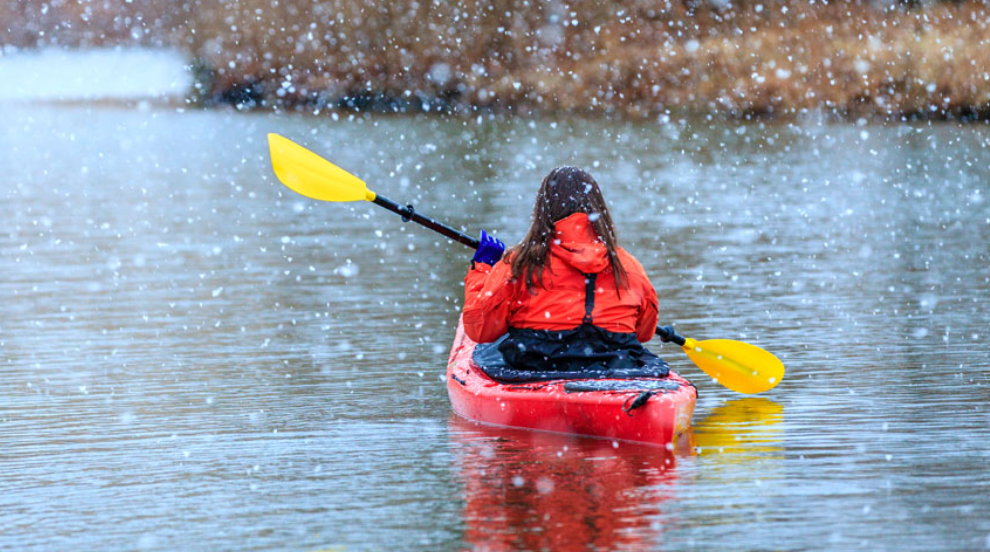
Outer layers protect you from wind, rain, and splash. A waterproof paddling jacket, often called a dry top, is designed to seal at the neck, wrists, and waist to keep water out. In colder conditions, spray pants or dry pants can be paired with a dry top for additional protection. For extreme cold or long-distance kayaking, a full drysuit may be the safest option.
Footwear for Cold-Weather Kayaking
Cold feet can quickly ruin a kayaking session. Neoprene booties or insulated paddling shoes help retain warmth while offering grip for launching and landing. Thermal socks can be layered underneath for added insulation, especially in near-freezing conditions. Footwear should fit comfortably inside the kayak without restricting circulation.
Gloves, Hats and Accessories
Hands and head lose heat quickly in cold weather. Neoprene gloves or pogies help keep hands functional while paddling. A thermal beanie or skull cap worn under a helmet reduces heat loss from the head. Sunglasses with a retainer strap help manage glare from low winter sun, and a dry bag with spare clothing is always a smart precaution.
Choosing Between a Wetsuit and a Drysuit
Wetsuits provide insulation by trapping a thin layer of water that your body warms, making them suitable for active paddling in cold but not extreme conditions. Drysuits keep you completely dry and allow layering underneath, making them better for very cold water, long trips, or remote locations. Some kayakers use hybrid setups, such as wetsuit pants with a dry top, to balance warmth and flexibility.
Takeaways
Always carry spare layers in a dry bag and change immediately if you get wet. Stay fuelled and hydrated, as your body burns more energy to stay warm in cold conditions. Most importantly, dress for immersion, not comfort on land. Proper clothing can make winter kayaking safer, more enjoyable, and far more comfortable.